
The year 2030 marks a new milestone in Europe’s journey toward better air quality.
EU Directive 2024/2881 introduces stricter limits for various air pollutants, including PM2.5, PM10, and NO₂, and promotes an approach increasingly focused on reducing emissions.
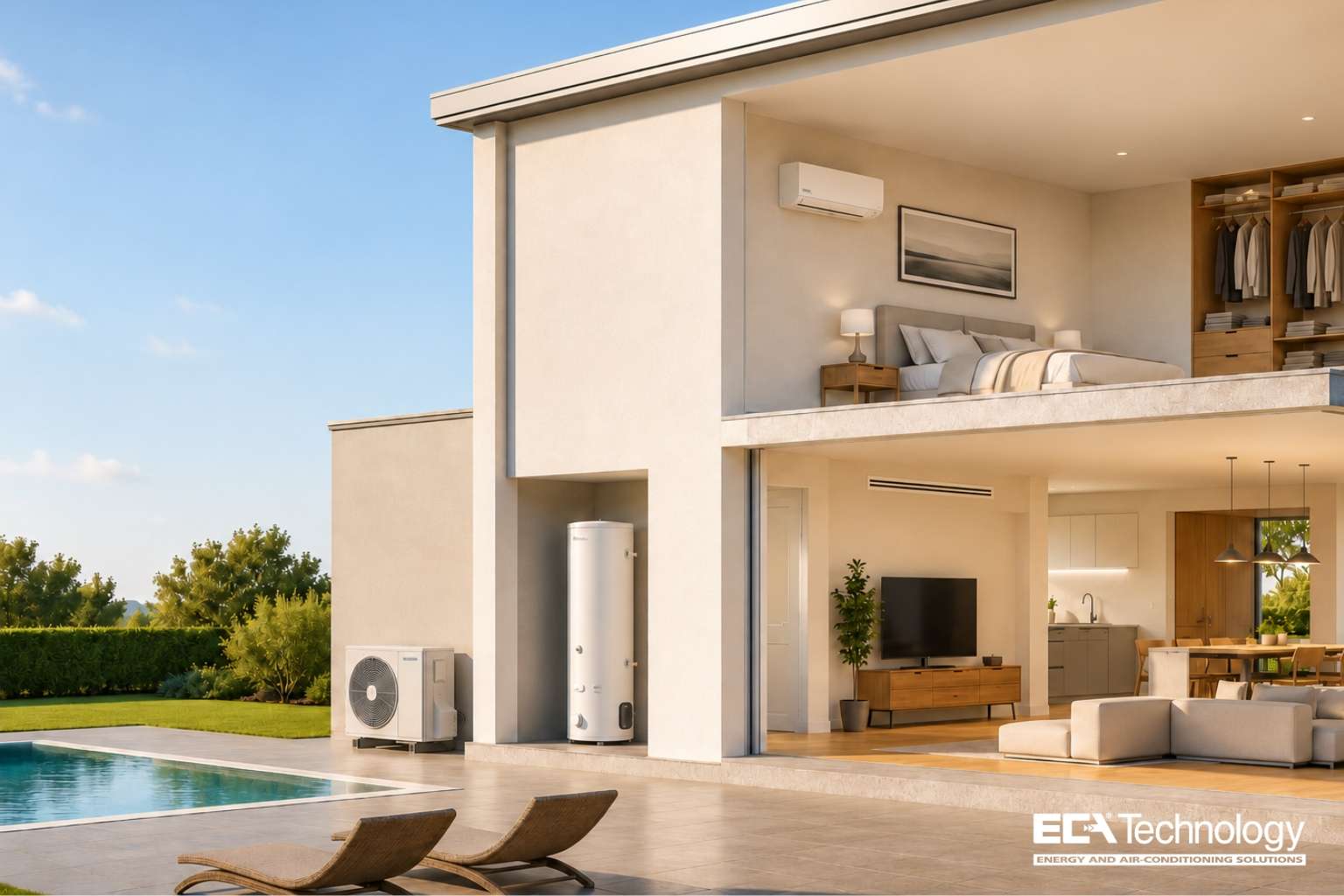
But improving air quality also means taking action on the sources that contribute to emissions.
And among these, the building heating sector is a key component of the energy transition.
This is where heat pumps come into play.
Unlike traditional systems that rely on the combustion of gas or other fuels, heat pumps use electricity to transfer heat from the outside environment into the building.
This technology therefore makes it possible to electrify heating, thereby helping to reduce the direct use of fossil fuels.
The benefit becomes even more appealing when the heat pump is combined with a photovoltaic system: the energy produced by the sun can be used to power the system, creating a direct link between renewable energy production and the building’s climate control.
It’s no longer just about heating.
Modern heat pumps can meet a variety of needs:
🌡️ Heating
❄️ Cooling
💧 Domestic hot water production
☀️ Integration with solar panels
📲 Smart energy management
It is this evolution that is transforming the very concept of a heating and cooling system: from a standalone comfort system to an integral part of the building’s energy ecosystem.
At ECA Technology, we are working toward this very goal, developing heat pump solutions such as the Acquainverter SMART R290 and integrated systems such as Multi Space Comfort, designed to meet the needs of buildings in terms of efficiency, comfort, and electrification.
Because the energy transition isn’t just about the amount of energy we consume.
It also increasingly concerns the way we produce it, use it, and turn it into comfort.
And the journey toward 2030 has already begun.